
Retail, logistic, educational services and fast moving consumer goods and durables alone will add around 1.66 lakh, 1.49 lakh, 1.17 lakh and 1.10 lakh jobs respectively.

While the company will gain from enhanced scale and size following the merger with Mahindra Satyam, its ability to bag large deals will be a key growth driver.

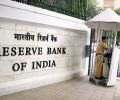
The Reserve Bank of India on Thursday opted for a pause second time in a row, maintaining key benchmark policy rate at 6.5 per cent as inflation moderates. The rate increase cycle was paused in April after six consecutive rate hikes aggregating to 250 basis points since May 2022. Announcing the bi-monthly monetary policy, RBI Governor Shaktikanta Das said the Monetary Policy Committee (MPC) unanimously decided to keep the rate unchanged at 6.5 per cent.

Over the years, NHAI's expenses have spiraled due to sharp increase in land acquisition costs, while budgetary support has shrunk, leading it to fall back on internal resources and market borrowings

Hindalco's first quarter (Q1FY23) results indicate healthy domestic volumes for aluminium and copper, and lower cost of production. Subsidiary Novelis saw weak volume trends but it managed to push operating profit margins on a better mix and pricing hikes. The weak global outlook on aluminium is a cause for ongoing concern.
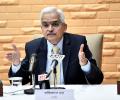
Key lending rate (repo) raised by 50 basis points to 4.9 per cent; 2nd increase in 5 weeks

Modi attended the 20th ASEAN-India Summit in Jakarta. Secretary-General of ASEAN Dr Kao Kim Hourn also attended the summit.

'India has the potential to do a lot more to take advantage of the time today where we stand to gain, geopolitically and in terms of market attractiveness.'

As temperatures soar across the country, amid searing heat wave, analysts see power demand hitting fresh record highs this year. The time, therefore, may be opportune to add related stocks on dips as higher demand boosts earnings visibility, they said. On April 18, India's electricity demand touched a new high of 216 gigawatts.

A neutral Budget for media and entertainment sector.

'Indian equity valuations, although not very expensive, are not cheap either.'

Lower revenue collection puts upward pressure on government borrowing, ensuring that it deviates from the glided path of debt reduction

Prime Minister's key economic advisor C Rangarajan on Friday lowered the growth forecast for the current fiscal to 5.3 per cent from 6.4 per cent projected earlier and listed out host of measures including further liberalisation of foreign direct investment norms to improve economic condition.
A weaker rupee is good for technology firms, as it improves margins and shores up earnings.

'India is the sixth-largest market for the Kia Corporation, and contributes 8 to 9 per cent to our global sales.' 'We are eyeing 10 per cent market share over the next few years depending on customer demand and new product innovations.'

Rebalance your portfolio in case it has become overweight on equities vis-a-vis your strategic asset allocation.

The index went below the crucial 50 mark.

Prospective buyers must make a well-considered decision regarding whether this is the right time to buy a house, particularly with home loan rates at near-peak levels, and the risk of job losses looming in many sectors.

Domestic air passenger traffic touched 1.25 crore in January this year, an increase of 96 per cent compared to the year-ago period, according to rating agency Icra. However, it said the traffic remained around 2 per cent lower compared to the pre-Covid levels -- January 2020. The traffic stood at 64 lakh in January last year. Icra is maintaining a negative outlook on the Indian aviation industry, reflecting the view that the financial performance of Indian airlines is likely to remain under pressure in the near term, even though the recovery in domestic passenger traffic has been healthy.

According to the ManpowerGroup Employment Outlook survey released on Tuesday, that covered 5,131 employers across India, a net 19 per cent of employers are anticipating an actual rise in their staffing numbers, while 52 per cent expect no change and 28 per cent are not sure about adding to their existing staff strength.

'Investors should hold equity assets for 3 to 5 years.'

Expenditure on new projects slowed down for the second quarter in a row amid an uncertain global environment and higher borrowing costs. There were new projects worth a cumulative Rs 3.26 trillion in the July-September period, according to data provided by project tracker Centre for Monitoring Indian Economy (CMIE). This figure is much less than Rs 4.39 trillion in the June quarter (Q1FY23) and Rs 8.46 trillion in the March quarter (Q4FY22).

'The market should maintain optimism on the back of range-bound oil prices, a robust fiscal balance sheet, a better-than-expected monsoon, and moderating inflation.'

Benchmark equity indices Sensex and Nifty ticked higher for the ninth straight session on Thursday, buoyed by fag-end buying in banking, financial and realty stocks amid encouraging domestic retail inflation data. Weak trends in IT counters and fall in the overnight US equity markets triggered by fresh concerns over recession, however, put a check on market's uptrend. In a largely subdued session, the 30-share BSE Sensex went up marginally by 38.23 points or 0.06 per cent to settle at 60,431.
In the April-June period, bond yields rose by 30 bps.

Automotive (auto) and auto ancillary stocks have been in the fast lane thus far in 2023-24 (FY24), with the National Stock Exchange Nifty Auto Index surging nearly 27 per cent, outperforming the Nifty50, which has gained roughly 11 per cent during this period. The top-gear performance of auto stocks at the bourses, according to A K Prabhakar, head of research at IDBI Capital, has been triggered by the premiumisation of products across vehicle manufacturers, which has seen vehicle sales remaining relatively stable. "It is not about higher sales figures now, but about premiumisation.

The World Bank has retained India's economic growth forecast for the current fiscal at 8.3 per cent as the recovery is yet to become broad-based. As per the first advanced estimates of the national income released by the National Statistical Office (NSO) last week, the economy is projected to grow at 9.2 per cent in 2021-22, surpassing pre-COVID level in actual terms, mainly on account of improved performance, especially in farm, mining and manufacturing sectors. "India's economy is expected to expand by 8.3 per cent in fiscal year 2021/22 (ending March 2022), unchanged from last June's forecast as the recovery is yet to become broad-based.

Asian Development Bank (ADB) has kept its outlook for India's economic growth unchanged at 7 per cent for the current fiscal year while forecasting a weaker-than-previously expected pace for developing Asia. ADB's 7 per cent growth projection for fiscal 2022-23 (April 2022 to March 2023), unchanged from its September forecast, compares to 8.7 per cent GDP growth in 2021-22. For 2023-24, the GDP growth has been kept unchanged at 7.2 per cent.
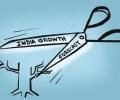
Moody's Investors Service on Thursday slashed India's economic growth projection for 2022 to 7.7 per cent, saying that rising interest rates, uneven monsoon, and slowing global growth will dampen economic momentum on a sequential basis.
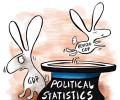
The Economic Survey 2022-23 (FY23), to be presented a day before Union Budget 2023-24 (FY24), is likely to project India's real gross domestic product (GDP) growth between 6 per cent and 7 per cent for FY24, Business Standard has learnt. The broader theme of the Survey could be on how India has dealt with two years of a global pandemic and the ongoing geopolitical disturbance, the strengths and weaknesses that emerged, and what lessons may be learnt. The much-awaited Survey will be the first one by Chief Economic Advisor V Anantha Nageswaran and his team in the finance ministry's economic division.

An exercise to rationalise coal linkages which will optimize transport of coal and reduce cost of power is underway.
